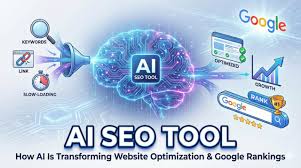
Search is no longer just about rankings it’s about relevance, context, and being chosen by AI. As platforms like Chat GPT, Google AI Overviews, and Perplexity reshape how users discover information, businesses are starting to rethink everything they knew about SEO.
That’s where AI search optimization tools come in. They don’t just help you rank they help you exist inside the answer itself.
What Are AI Search Optimization Tools?
In simple terms, these tools analyze your content and show how likely it is to be picked up, understood, and cited by AI systems.
Instead of focusing only on keywords or backlinks, they evaluate:
- Content clarity and structure
- Authority and trust signals
- Relevance to real user questions
- “Citation-worthiness” (how likely AI will reference your content)
This is a major shift. Traditional SEO aims for clicks. AI optimization aims for inclusion in answers.
Why These Tools Are Gaining So Much Attention
Search behavior is evolving rapidly. Users are no longer browsing multiple pages they’re asking direct questions and getting instant answers.
AI systems don’t just list links. They:
- Analyze multiple sources
- Extract useful information
- Combine it into one clear response
If your content isn’t structured for this process, it gets ignored even if it ranks well.
That’s why optimization tools built specifically for AI-driven search are becoming essential.
A Real-World Scenario
Let’s say you run an eCommerce store selling fitness equipment.
A user asks:
“What’s the best home workout setup for beginners?”
An AI tool generates a detailed answer recommending products, explaining setups, and citing sources.
Your website has great content… but it’s not mentioned.
Your competitor’s site is.
No clicks. No sales. No visibility.
AI search optimization tools help you understand why that happened and how to fix it.
How AI Optimization Tools Actually Help
These tools don’t just provide data they give direction.
Faster Analysis and Execution
Manual optimization can take hours per page. AI tools analyze content in seconds, saving massive time and effort.
Clear, Measurable Insights
Instead of guessing what works, you get:
- Scores
- Recommendations
- Before-and-after comparisons
Content Strategy Guidance
They reveal:
- What topics AI prefers
- Which questions are being asked
- Where your content falls short
Competitive Intelligence
You can see which competitors are being cited and why.
This turns AI search from a mystery into something you can actually optimize.
A Personal Perspective
I once worked on content that ranked on Google’s first page, but when we checked AI-generated answers, it wasn’t mentioned even once which completely changed how we approached optimization.
Comparison: AI Tools vs Traditional SEO Tools
Here’s where the real difference becomes clear:
| Feature | AI Search Optimization Tools | Traditional SEO Tools |
|---|---|---|
| Track keyword rankings | ❌ | ✅ |
| Measure AI visibility | ✅ | ❌ |
| Analyze citation potential | ✅ | ❌ |
| Focus on user intent | Strong | Moderate |
| Provide AI-ready insights | ✅ | ❌ |
| Goal | Be included in answers | Rank on search pages |
Both have value but they solve different problems.
The Hidden Advantage Most People Overlook
Here’s something powerful that often gets missed:
These tools don’t just improve your content they improve your thinking.
Instead of writing for algorithms, you start writing for understanding.
You begin to:
- Answer questions directly
- Structure ideas clearly
- Focus on usefulness over fluff
And that shift naturally makes your content better not just for AI, but for real people too.
What Makes Content “AI-Friendly”?
AI systems prioritize certain characteristics when selecting sources:
- Clear structure (headings, short sections)
- Direct answers to questions
- Consistent messaging across pages
- Strong trust signals (expertise, accuracy)
In fact, AI doesn’t evaluate content the same way search engines do it focuses more on meaning, clarity, and usability rather than just keywords.
That’s why optimization tools are so valuable they help align your content with these expectations.
The Bigger Shift: From Rankings to Mentions
One of the biggest changes happening right now is this:
Visibility is moving from rankings to mentions.
Instead of competing for clicks, you’re competing to be:
- Quoted
- Referenced
- Trusted
AI search optimization tools track this new kind of visibility something traditional tools simply can’t measure.
Challenges Without AI Optimization Tools
If you’re not using these tools, you’re essentially working blind.
You might:
- Create content that never gets cited
- Miss key user questions
- Lose visibility to competitors
- Misinterpret what AI systems actually prefer
And the worst part? You won’t even realize it’s happening.
The Future of AI Search Optimization
AI search is still evolving but one thing is clear:
It’s not replacing SEO. It’s redefining it.
Future trends include:
- More conversational search queries
- Increased zero-click behavior
- Greater reliance on trusted sources
- Higher importance of structured, answer-focused content
AI search optimization tools will become a standard part of every serious digital strategy.
Related: Aligned Data Centers: Powering the Future of Digital Infrastructure
Conclusion
The digital landscape is changing and fast.
AI is becoming the primary way people discover information, and that means visibility is no longer just about rankings. It’s about being part of the answer.
AI search optimization tools give you the insight, clarity, and direction needed to adapt to this shift.
Because in a world where AI decides what users see, the real goal isn’t just to rank it’s to be remembered, referenced, and trusted.
FAQs
What are AI search optimization tools?
They are tools that analyze content and help improve its chances of being cited or included in AI-generated search results.
How are they different from traditional SEO tools?
Traditional tools focus on rankings and traffic, while AI tools focus on visibility inside AI-generated answers.
Do I still need SEO if I use AI tools?
Yes. AI optimization works alongside SEO, not as a replacement.
Who should use AI search optimization tools?
Marketers, content creators, businesses, and agencies looking to improve visibility in AI-driven search platforms.
Can these tools guarantee AI visibility?
No tool can guarantee it, but they significantly improve your chances by aligning your content with what AI systems prefer.