Artificial intelligence is moving fast faster than most organizations can fully understand, let alone control. From chat bots and recommendation systems to autonomous decision-making models, AI is now deeply embedded in how businesses operate.
But here’s the catch: with great power comes serious responsibility.
That’s where AI governance tools step in not as optional add-ons, but as essential systems that ensure AI is used safely, ethically, and effectively.
What Are AI Governance Tools?
At their core, AI governance tools are software solutions designed to monitor, manage, and regulate how AI systems are built and used within an organization.
They help answer critical questions like:
- Is this AI system compliant with regulations?
- Are there risks like bias or data leakage?
- Who is responsible for this model?
- Can we explain how decisions are being made?
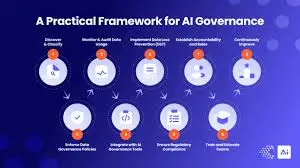
These tools provide visibility, accountability, and control across the entire AI life cycle from development to deployment.
Why AI Governance Is No Longer Optional
AI adoption is accelerating across industries but governance is struggling to keep up.
In fact, organizations are now realizing that unmanaged AI can create serious risks:
- Legal and regulatory violations
- Biased or unfair outcomes
- Data privacy breaches
- Loss of customer trust
Modern governance platforms are built to handle these challenges by ensuring AI systems remain compliant, transparent, and aligned with business policies.
How AI Governance Works in Real-World Environments
Let’s say a financial company uses AI to approve loan applications.
The system works fast analyzing thousands of applications in minutes. But one day, regulators discover that the model is unintentionally biased against certain demographics.
Without governance tools, the company might not even realize the issue until it becomes a legal problem.
With proper AI governance in place, however, the system would:
- Flag bias early
- Track decision patterns
- Provide audit trails
- Enable quick corrective action
That’s the difference between reactive damage control and proactive risk management.
Key Features That Make These Tools Powerful
AI governance platforms are not just dashboards they are intelligent control systems.
Here’s what they typically offer:
AI Inventory & Visibility
They maintain a centralized registry of all AI systems, including third-party and embedded models.
Risk Assessment
They evaluate potential risks such as bias, security threats, and compliance gaps.
Policy Enforcement
They ensure AI systems follow organizational rules and regulatory requirements automatically.
Audit Trails
Every action is logged, making it easy to track decisions and generate reports.
Continuous Monitoring
They don’t just check once they monitor AI systems in real time for changes or anomalies.
A Personal Perspective
I once reviewed an AI-driven content system that seemed perfect on the surface, but when we looked deeper, it lacked any governance structure meaning no one could explain how its decisions were made, which immediately raised red flags.
Comparison: AI Governance Tools vs Traditional Monitoring
To better understand their value, here’s a simple comparison:
| Feature | AI Governance Tools | Traditional Monitoring Tools |
|---|---|---|
| AI lifecycle tracking | ✅ | ❌ |
| Bias detection | ✅ | ❌ |
| Compliance enforcement | ✅ | Limited |
| Real-time monitoring | ✅ | Partial |
| Audit & reporting | ✅ | Basic |
| Focus | Responsible AI use | System performance |
This highlights a key point: traditional tools track performance, while governance tools ensure responsibility.
Popular AI Governance Platforms
Several platforms are leading the way in this space:
- IBM watsonx.governance – Enterprise-grade solution for managing AI risk and compliance across systems
- Credo AI – Focuses on responsible AI adoption and risk assessment
- LogicGate Risk Cloud – Flexible governance, risk, and compliance platform
These tools provide centralized control, automated workflows, and scalable governance for modern AI environments.
The Hidden Value Most Businesses Miss
Here’s something subtle but powerful.
AI governance tools don’t just protect your organization they improve your AI outcomes.
When you monitor and refine AI systems properly:
- Decisions become more accurate
- Models become more reliable
- Trust increases internally and externally
In other words, governance isn’t a limitation it’s an enabler.
Challenges Without Governance Tools
Ignoring AI governance isn’t just risky it’s expensive.
Companies without proper oversight often face:
- Unexpected compliance failures
- Poor decision transparency
- Difficulty scaling AI systems
- Increased operational risks
In some cases, AI failures can damage a brand’s reputation permanently.
The Future of AI Governance
The demand for governance tools is growing rapidly and for good reason.
Experts predict that AI governance will become a core part of enterprise strategy, not just a technical requirement.
Future trends include:
- More automated compliance systems
- Real-time governance for AI agents
- Stronger focus on transparency and explainability
- Integration with security and data platforms
As AI becomes more powerful, governance will become even more critical.
Related: Lexun: Everything You Need to Know About This Digital Platform
Conclusion
AI is transforming industries but without proper control, it can also introduce serious risks.
That’s why AI governance tools are no longer optional they’re essential.
They provide the structure, visibility, and accountability needed to ensure AI systems operate responsibly while still enabling innovation.
In a world where AI decisions can impact millions of people, governance isn’t just about compliance it’s about trust.
FAQs
What are AI governance tools used for?
They are used to monitor, manage, and ensure compliance of AI systems, helping organizations reduce risks and maintain transparency.
Why are AI governance tools important?
They prevent issues like bias, data breaches, and regulatory violations while improving trust in AI systems.
Who needs AI governance tools?
Any organization using AI especially in industries like finance, healthcare, and technology.
Are AI governance tools only for large companies?
No. While enterprises use them extensively, smaller businesses can also benefit from basic governance solutions.
Do AI governance tools slow down innovation?
No. In fact, they help scale AI safely by providing structure and reducing risks.